

Faculty of Medecine Lyon Est, Université Lyon 1
Research on Healthcare Performance (RESHAPE), Unité 1290, Inserm/Université Lyon 1
SimULyon - Healthcare Simulation Centre - Université Lyon 1 / Hospices Civils de Lyon
- Health Professionals
- Implementation science
My research aims to identify effective tools to promote well-being, health, and individual performance. I primarily focus on preventive and personalized approaches for individuals exposed to frequent stressful situations. One of my main areas of expertise is the study of stress, which I investigate through both fundamental research and field studies.
I am particularly involved in medical education research, including the development of healthcare simulation studies and the design and evaluation of educational programs. My approach is multidisciplinary, combining methods from psychology and behavioral sciences, such as questionnaires and individual and focus-group interviews, with public health approaches to the implementation and evaluation of prevention programs.
My most recent research focuses on identifying effective strategies to promote well-being and performance among university students in medical and allied health programs.
Keywords : Coping ; Medical Education ; Performance ; Psychophysiology ; Simulation ; Sleep ; Stress
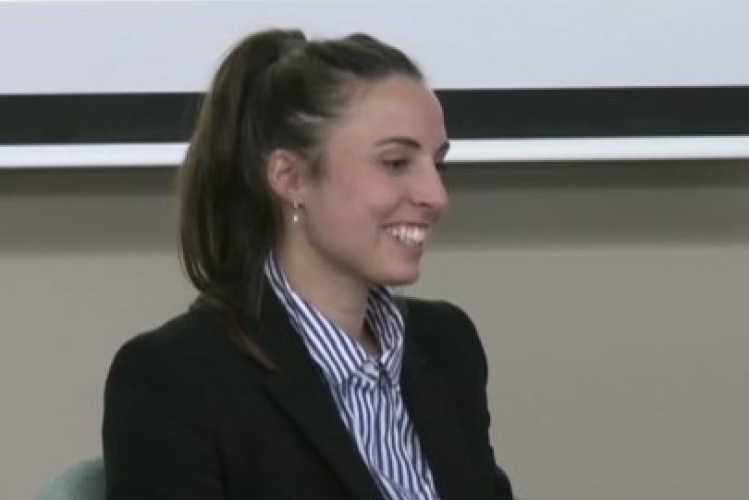
S. Schlatter has a multidisciplinary background spanning biology, sport sciences, behavioural sciences, public health, and medical education. Her research examines factors influencing health, well-being, and human performance, with a particular interest in stress, health behaviours, and individual differences. She combines experimental, psychophysiological, and field-based approaches to study these factors and evaluate preventive interventions. Her current research focuses on developing and evaluating preventive and personalized approaches for university students, particularly medical and health professions trainees. She was recently appointed Associate Professor of Psychology at the Faculty of Medicine Lyon Est.
26. Reducing Sedentary Behaviour and Promoting Physical Activity in Medical Students’: Protocol of the PROMESS-Physical Activity randomized controlled clinical trial. Schlatter S, Mura M, Bertrand M, Morel-Prieur B, Loisel O, Aouidat M, Gouraud E, Henry A, Hautier C, Pialoux V, Rode G, Métais A. Accepted in Trials (Sept 2026) https://www.researchsquare.com/article/rs-7441836/v1
25. A Personalized Recovery Intervention to Support Sleep Health in Emergency Healthcare Professionals. Schmidt L, Rey A, Valero B, Schlatter S, Reynaud E, Lilot M, Tazarourte K, Douplat M, Mazza S. Sleep Research (in proofing - Aout 2026)
24. Stress among thoracic and cardiovascular surgeons: a nationwide french survey. Haouache D, Schlatter S, Baste JM, Leftz O, Grinberg D*. BMC Medical Education (in proofing – Aout 2026)
23. Clinical Performance in Critical Care Simulation Under Sleep Deprivation: Effects of Power Napping in the R-NAP Randomized Controlled Trial. Schmidt L, Genty F, Delaire T, Valero B, Rey I, Galan L, Mairet-Mabboux S, Douplat M, Schlatter S, Rimmelé T, Mazza S, Lilot M Anesthesiology May (2026) https://doi.org10.1097/ALN.0000000000006135
22. Impact of a brief HRV-Biofeedback intervention on emotion regulation following a real-life stressful event: a randomized controlled study. Depoorter J*, Hoorlbeke K, Guillaumée T, Cortet M, Lilot M, Rode G, De Raedt R, Schlatter S. Behaviour Research and Therapy 26;199:104979 (2026) https://doi-org.docelec.univ-lyon1.fr/10.1016/j.brat.2026.104979
21. Blended compared with face-to-face teaching for general practice trainees: a randomized controlled trial. Meunier PY*, Schlatter S, Macabrey J, Zorzi F, Colleony T, Boussageon R, Maisonneuve H, Lamort-Bouché M. 12:e86387 (2026) JMIR Medical Education https://mededu.jmir.org/ 2026 /1 /e86387
20. High risk, low rest: a new framework for monitoring sleep vulnerability in emergency medicine. Schmidt L*, Trousselard M, Perez C, Reynaud E, Valero B, Schlatter S, Tazarourte K, Doulpat M, Mazza S. Frontiers in Public Health 13:1679296 (2025) https://doi.org/10.3389/fpubh.2025.1679296
19. The Influence of Postoperative Patient Equipment on Parental Anxiety in a Quaternary Pediatric Surgical Cardiac Intensive Care Unit: A Prospective Longitudinal Observational Study. Mairet-Mabboux S*, Blache T, Koffel C, Schlatter S, Bulescu C, Tortigue M, Lalin O, Piriou V, Henaine R, Lilot M. Journal of Pediatric Health Care 00, 1-13 (2025) https://doi-org.docelec.univ-lyon1.fr/10.1016/j.pedhc.2025.09.019
18. Addressing Medical Students' Health Challenges: Codesign and Pilot Testing of the Preventive Remediation for the Optimal MEdical StudentS (PROMESS) program. Métais A*, Besnard L, Valero B, Henry A, Schott AM, Rode G, Haesebaert J, Fassier JB, Schlatter S. BMC Medical Education 31;25(1):812 (2025) https://doi: 10.1186/s12909-025-07209-4
17. Influence of a six-month home-based individualized physical activity intervention on carotid plaque instability measured by magnetic resonance imaging: a randomized controlled clinical trial. Mura M, Rivoire E, Dehina-Khenniche L, Jazzar G, Schlatter S, Della-Schiava N, Arsicot M, Fayad Z, Lermusiaux P, Long A, Douek P, Chirico E, Thomas A, Pialoux V*, Millon A. eClinical Medicine The Lancet 83:103158 (2025) https://doi.org/10.1016/j.eclinm.2025.103158
16. Determining the influence of a sleep improvement intervention on medical students’ sleep and fatigue: the protocol of the PROMESS-Sleep clinical trial. Ruet A, Ndiki Mayi EF, Métais A, Valero B, Henry A, Duclos A, Lilot M, Rode G, Schlatter S*. BMC Medical Education 19;25(1):267 (2025) https://doi.org/10.1186/s12909-024-06422-x
15. Determining the influence of an intervention of stress management on medical students’ levels of psychophysiological stress: the protocol of the PROMESS-Stress clinical trial. Métais A*, Omarjee M, Valero B, Gleich A, Mekki A, Henry A, Duclos A, Lilot M, Rode G, Schlatter S. BMC Medical Education 25:225 (2025) https://doi.org/10.1186/s12909-024-06344-8
14. Effect of Coping Interventions on Performance of Medical Students during Objective Structured Clinical Examination: a randomized Controlled Trial. Schlatter S*, Berland A, Lutz A, Shankland R, Barret N, Guillaumée T, Duclos A, Cortet M, Rimmelé T, Rode G, Lilot M. Medical Teacher 47(8) 1367-1376 (2024) https://doi.org/10.1080/0142159X.2024.2431137
13. Sleepiness may predict hypnotizability, while personality traits do not. Gelebart J*, Schlatter S, Billot M, Debarnot U. American Journal of Clinical Hypnosis 20:1-13 (2024) https://doi.org/10.1080/00029157.2024.2387360
12. Associations of coping and health-related behaviors with medical students’ well-being and performance during objective structured clinical examination. Barret N, Guillaumée T, Rimmelé T, Cortet M, Mazza S, Duclos A, Rode G, Lilot M, Schlatter S*. Scientific reports 17;14(1):11298 (2024) https://doi.org/10.1038/s41598-024-61800-1
11. Association of Personality Traits With the Efficacy of Stress Management Interventions for Medical Students Taking Objective Structured Clinical Examinations. Le Saux O*, Canada B, Debarnot U, El Houda Haouhache N, Lehot JJ, Binay M, Cortet M, Rimmelé T, Duclos A, Rode G, Lilot M, Schlatter S. Academic Medicine 1;99(7):784-793 (2024). https://doi.org/10.1097/ACM.0000000000005714
10. Towards a More Individualized Practice of Motor Imagery: The Additional Value of the Personality Dimension Extraversion. Schmidt L*, Schlatter S, Debarnot U, Simonsmeier B, Guillot A. Imagination, Cognition and Personality 43(3) (2023) https://doi.org/10.1177/02762366231205579
9. Influence of the embedded participant on learners’ performance during high-fidelity simulation sessions in healthcare. Koca A*, Schlatter S, Delas Q, Denoyel L, Lehot JJ, Lilot M, Rimmelé T. BMC Medical Education 23:751 (2023) https://doi.org/ 10.1186/s12909-023-04724-0
8. The impact of shift work on pain recognition, a robust ability among intensive care nurses. Schmidt L*, Zabelberg S, Schlatter S Adams I, Douplat M, Perchet C, Lilot M, Rey A, Mazza S. European Journal of Pain 12 (2023) https://doi.org/10.1002/ejp.2150
7. Personality traits affect anticipatory stress vulnerability and coping effectiveness in occupational critical care situations. Schlatter S*, Louisy S, Canada B, Therond C, Duclos A, Blakeley C, Lehot JJ, Rimmelé T, Guillot A, Lilot M, Debarnot U. Scientific Reports, 12, 20965 (2022) https://doi.org/10.1038/s41598-022-24905-z
6. Effects of relaxing breathing paired with cardiac biofeedback on performance and relaxation during critical simulated situations: A prospective randomized controlled trial. Schlatter S*, Thérond C, Guillot A, Louisy S, Duclos A, Lehot JJ, Rimmelé T, Debarnot U, Lilot M. BMC Medical Education 22, 422 (2022) https://doi.org/10.1187/s12909-022-03420-9
5. Combining Proactive Transcranial Stimulation and Cardiac Biofeedback to Substantially Manage Harmful Stress Effects. Schlatter S*, Guillot A, Schmidt L, Mura M, Trama R, Di Rienzo F, Lilot M, Debarnot U. Brain Stimulation 14, 1348-1392 (2021) https://doi.org/10.1016/j.brs.2021.08.019
4. Implementing biofeedback as a proactive coping strategy: Psychological and physiological effects on anticipatory stress. Schlatter S*, Schmidt L, Lilot M, Guillot A, Debarnot U. Behaviour Research & Therapy 103834 (2021) https://doi.org/10.1016/j.brat.2021.103834
3. Acute stress affects implicit but not explicit motor imagery: A pilot study. Schlatter S*, Guillot A, Faes C, Saruco E, Collet C, Di Rienzo F, Debarnot U. International Journal of Psychophysiology, 152, 62-71 (2020) https://doi.org/10.1016/j.ijpsycho.2020.04.011
2. Early stimulation of the left posterior parietal cortex promotes representation change in problem solving. Debarnot U*, Schlatter S, Monteil J, Guillot A. Scientific Reports, 9, 16523 (2019) https://doi.org/10.1038/s41598-019-52668-7
1. Putative sex-specific human pheromones do not affect gender perception, attractiveness ratings or unfaithfulness judgements of opposite sex faces. Hare R, Schlatter S, Rhodes G, Simmons L*. Royal Society Open Science 4, 160831 (2017) https://doi.org/10.1098/rsos.160831
